PSYENCE: hide refused to choose a genre

Released on September 2, 1996, PSYENCE moved from big-band brass to industrial rock, garage punk and pop without allowing any genre to define hide.

Released on September 2, 1996, PSYENCE moved from big-band brass to industrial rock, garage punk and pop without allowing any genre to define hide.

55 RED arrives today with 55 BLACK RETURNS. Maki Ohguro completes a two-album project conceived at 55 as her 35th-anniversary campaign begins.

Rock, hip-hop, metal, idols or enka: why are so many different kinds of music gathered under J-POP — and why did J-POP streaming choose it over J-music?"
focus_keyphrase: "What is J-POP?

SCANDAL will end its activities on August 21, 2027, after one final tour of Japan. The band has announced neither a breakup nor a hiatus. We look back at twenty years together.
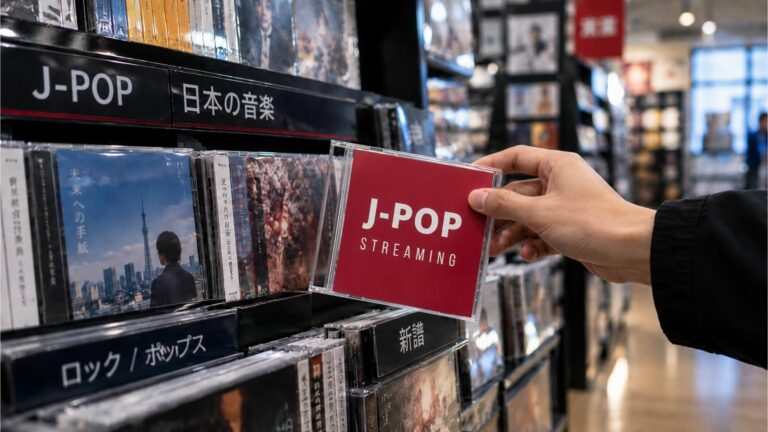
The website disappeared and the playlists stopped moving. The desire behind J-POP streaming did not. Here is why it went away, what changed and why it can now return.

Shuichi Aoki and Chie Iwashita revisit Night Hawks’ difficult history, their unexpected return, the meaning of rock and the forty-year journey behind “Anmoku no Hibi.”

With “Ronin,” Re:O became a four-piece built on incompatible influences, impossible drum parts and a shared desire to push Rio Suyama’s songs somewhere heavier.

From a used synthesizer to “Save my love,” Flehmann explains how he returned to music, builds from sound and learned to write for voices.

In early 2024, OTO MAYUMI spoke to J-POP streaming about Good and Bad Shades, her love of 1990s J-rock and the producer who helped her find the right sound.