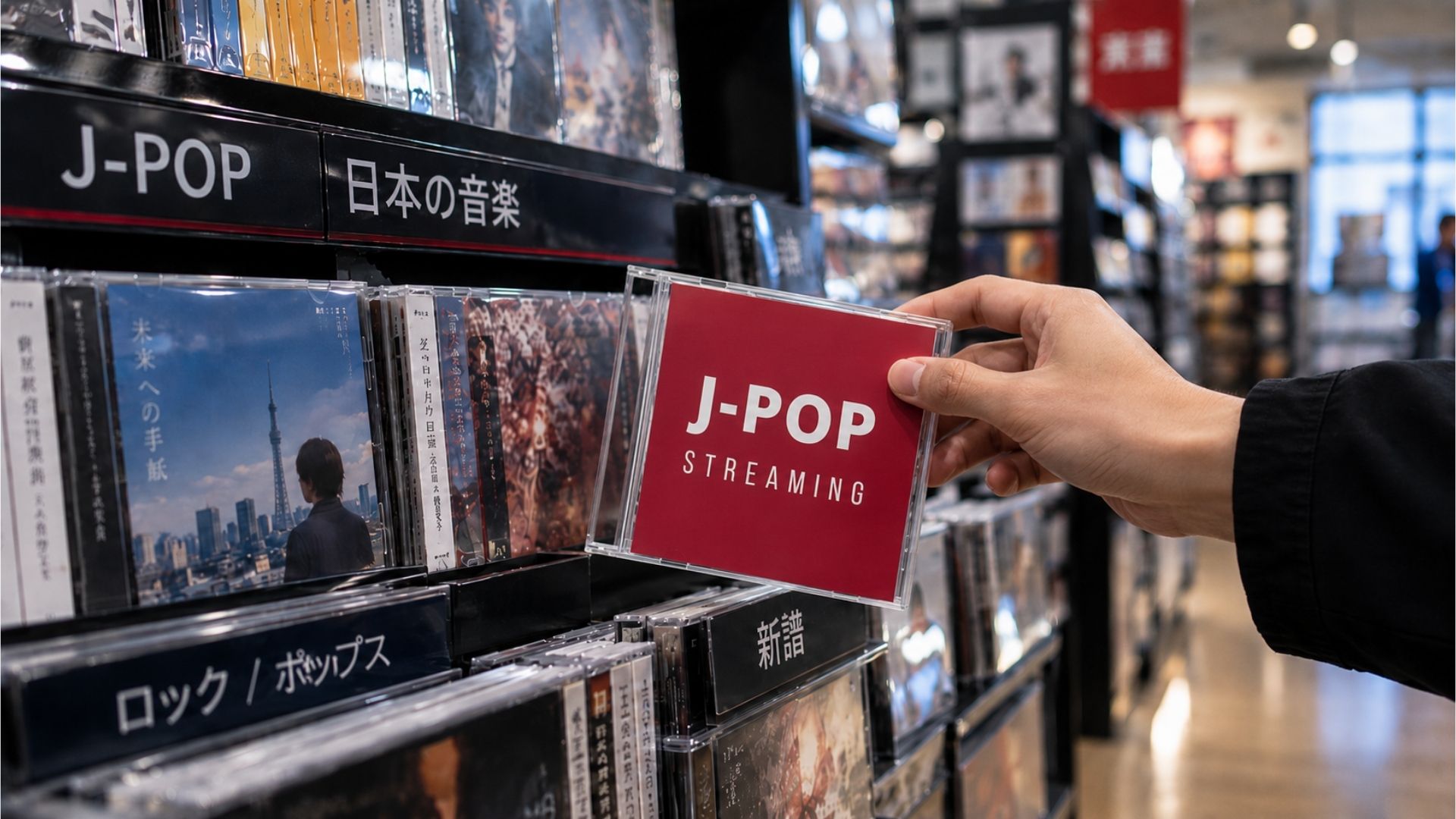

The website vanished. The playlists stayed online, frozen on their final updates. Anyone arriving at J-POP streaming had every reason to assume the project was dead.
Fair enough.
It was not dead. It had become unworkable.
Every week, J-POP streaming had to process hundreds of Japanese releases before a single track could reach the playlist. Spotify’s API carried a large part of that machinery. Then its rules changed. The workflow had to be adjusted, repaired, sometimes reconsidered entirely, with no guarantee that the next solution would last.
I kept adapting until the absurdity became difficult to ignore: too much of my time was being spent maintaining access to the tools rather than listening to the music.
There is no editorial team waiting behind the J-POP streaming logo. No technical department either, unfortunately. JPS is a one-man band. The research, the checks, the playlists, the articles, the interviews, the visuals, the website and the inevitable problems all arrive on the same desk.
Mine.
I have loved Japanese music for more than thirty years. Long enough for it to change the people I met, the places I travelled to and the projects I believed I could build. Yet the impulse behind J-POP streaming remains wonderfully uncomplicated: hear a song, feel something, immediately want somebody else to hear it.
JPS was born from that reflex.
The trouble began when sharing the music became less enjoyable than keeping the system alive. Sundays were disappearing into technical work. Each new complication added another small obligation to a project I had created for pleasure.
There is no medal for turning a passion into an unpaid second job. I do not need to exhaust myself to prove that Japanese music matters to me. Three decades should be sufficient evidence.
So I stopped forcing a fragile machine to continue.
The break gave me time to strip the process down and rebuild it around one simple condition: J-POP streaming had to fit into my life without taking it over. It still needed to search widely, check carefully and provide the same weekly service. It could no longer depend on technical rules decided elsewhere.
That work is now done.
The workflow behind the weekly playlist is virtually independent of Spotify’s API. Spotify still hosts the playlist because that is where many people listen to it. Its technical decisions no longer determine whether I can produce the selection. If the rules change again, there may be some irritation. There should no longer be an existential crisis.
Fixing the machinery answered how J-POP streaming could return. It left another question waiting: what exactly was worth bringing back?
The playlist, obviously. It remains the core of the project and the fastest way to place hundreds of Japanese releases in front of listeners every week. It is also terribly forgetful.
A track arrives near the top, survives there for a few days, then sinks beneath the following week’s releases. An artist nobody knew can appear, make an impression and disappear again before anyone has learned their story. The playlist keeps moving because that is its job. A media outlet should sometimes stop.
The new J-POP streaming will do both.
It will follow music as it is released, then give selected artists, records and moments enough space to remain visible. A new song may lead to an interview. An anniversary may reopen an album that has slipped out of the international conversation. A current trend may make more sense when placed beside something recorded twenty or sixty years earlier.
This is what “a contemporary music medium with a memory” means here. Not nostalgia. Memory.
“J-POP” still describes the whole musical landscape of Japan at J-POP streaming. Famous names and artists releasing their first song. Pop, rock, hip-hop, electronic music, metal, jazz, idol music, enka, and whatever has decided that genres are somebody else’s problem. The borders remain open. The editorial choices will be clearer.
The new website has been built for that purpose. The design is more coherent, the articles have a real place to live and the weekly playlist is no longer expected to carry the entire project on its back.
I am not promising to publish everywhere, every day, forever. That is how a project created from enthusiasm slowly becomes an obligation, then a burden, then a website nobody has the courage to update.
J-POP streaming is returning at a rhythm I can sustain, with work I still genuinely want to do.
The website is back. The playlists will move again. And after more than thirty years, I am still impatient to hear the next song.
That is reason enough.