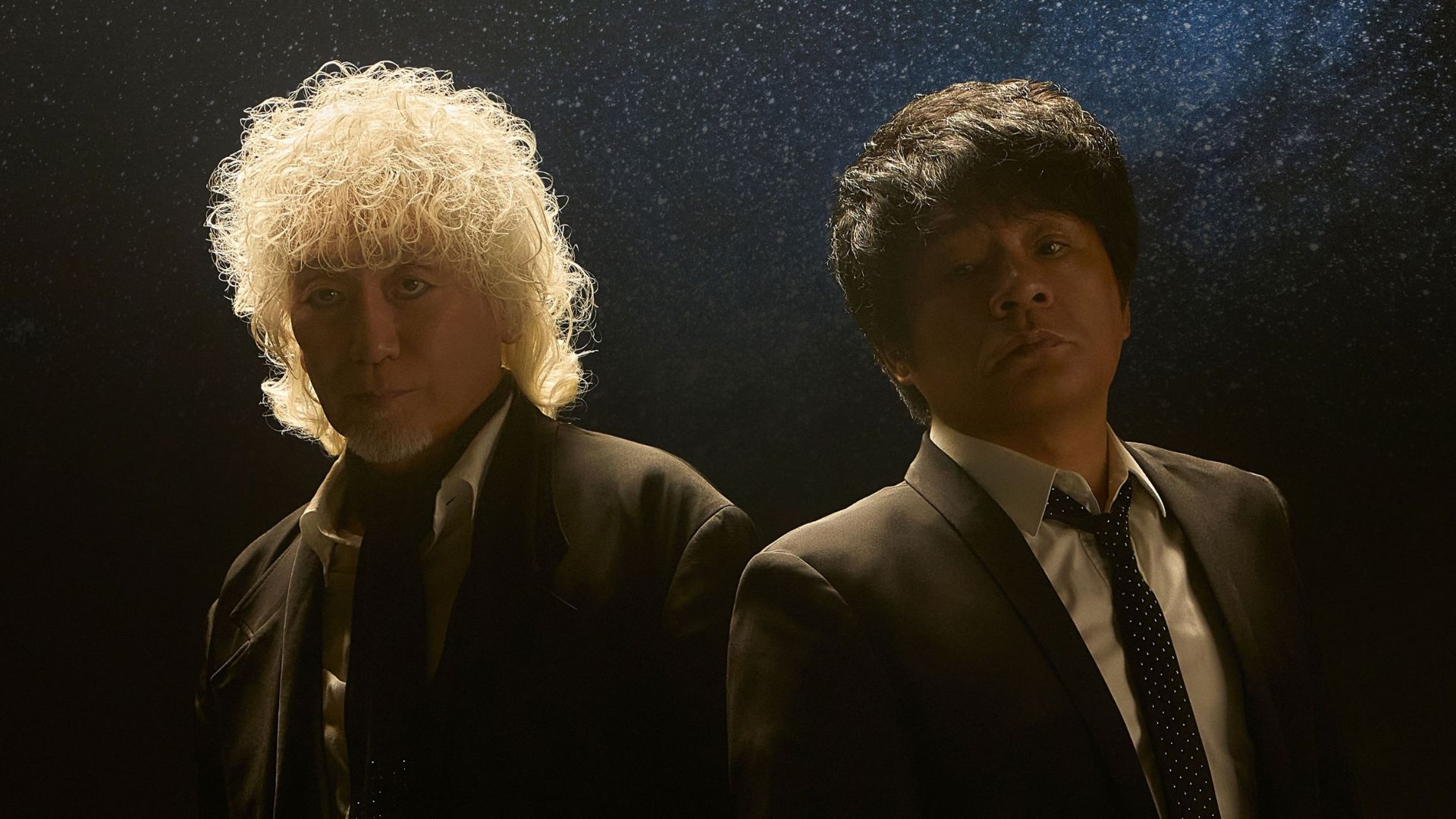

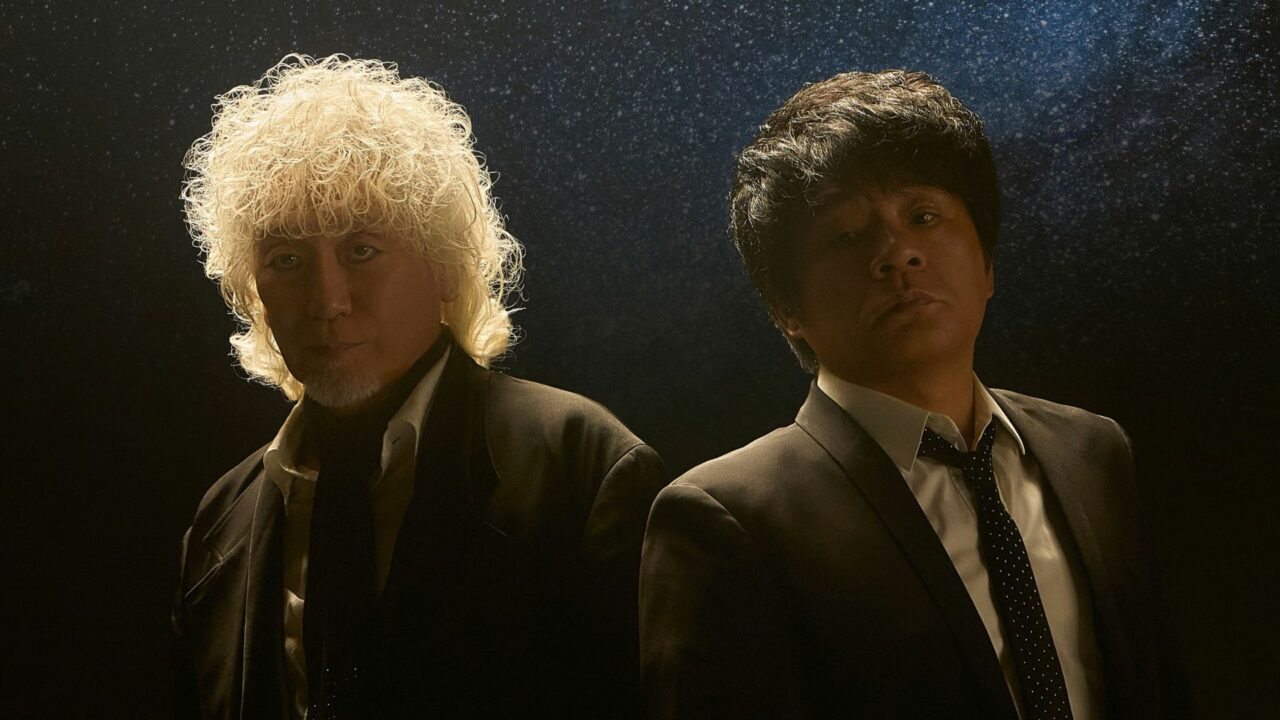
In January 2026, 玉置浩二 (Koji Tamaki) called ASKA with a question: should they perform that unreleased song?
The song was 「音銀河」 (Oto Ginga). They had written it more than twelve years earlier and even attempted to record it. The session stopped before the work was finished. Now Tamaki wanted to sing it on NHK BS’s Koji Tamaki Show. The backing track was still incomplete.
ASKA accepted. He concentrated on the production, rebuilt the song from the beginning and entered the NHK studio with Tamaki before any label or release date had been decided. The performance aired in March. The single follows on September 16.
This order says more about Oto Ginga than the usual promise of a long-awaited meeting. Tamaki and ASKA chose the performance first. The commercial release came later.
A cassette between two separate histories
Tamaki and ASKA were both born in 1958, but their careers do not form a tidy pair.
CHAGE and ASKA debuted in 1979. By the early 1990s, songs such as 「SAY YES」 and 「YAH YAH YAH」 had placed the duo at the centre of Japanese popular music. Their concerts also reached audiences across East Asia, while ASKA built a solo repertoire alongside the group.
安全地帯 (Anzen Chitai) made their record debut in 1982. 「ワインレッドの心」 (Wine Red no Kokoro) became their breakthrough the following year, followed by songs including 「恋の予感」 (Koi no Yokan) and 「悲しみにさよなら」 (Kanashimi ni Sayonara). Their music travelled through Hong Kong, Taiwan, Singapore and Malaysia, helped by numerous Cantonese adaptations. Tamaki began his solo career in 1987 and gradually established another catalogue under his own name.
They belonged to the same generation and knew each other privately. They also remained attached to different bodies of work, different partnerships and crowded schedules. ASKA has written that they often spoke about sharing a stage. A tour together was another matter.
Music still appeared when they met. Tamaki once brought ASKA a cassette. ASKA added his own ideas, then the song passed between them as they worked on it. That exchange produced Oto Ginga.
The first recording attempt did not produce a release. There was no thirteen-year campaign to rescue it. Work stopped.
The television appearance revived the project almost by accident. According to ASKA’s account, the programme was initially arranged between NHK and their respective management teams. Neither singer knew about it until the plans were in place. Tamaki then called and suggested the unreleased song.
ASKA even returned to the kanji credit 飛鳥涼 (Asuka Ryō), used earlier in his career, for the broadcast. He described the studio performance as a source of joy unlike anything he had experienced before. At that point, the record company remained undecided. So did the release date.
“Presenting it is everything,” he wrote.
The old song was no longer enough
The version created more than twelve years earlier was rough, according to ASKA. Time had not preserved it in a form he wished to release.
“When twelve or thirteen years have passed, you want to change the lyrics, the melody and the arrangement in all kinds of places,” he explained after the broadcast.
He did exactly that.
This was not restoration work. The old cassette supplied the history and part of the material. The 2026 production required another composition process, a completed backing track and a new recording. Sony Music describes the result as a full collaboration, carrying the two singers’ thoughts for people living today and their hopes for the future.
Their common birth year provides context, not a ready-made interpretation. Oto Ginga does not need to become a solemn statement about two men approaching seventy. What matters is simpler: after more than four decades in music, they were willing to reopen their own decisions. Familiar words, melodies and arrangements were changed because they no longer sounded finished to the people who had made them.
The CD also includes a second new song, 「命の宿り」 (Inochi no Yadori), followed by an instrumental version of Oto Ginga. Sony presents Inochi no Yadori as an acoustic piece about the value of life. Its presence keeps the release from becoming a physical souvenir of the NHK performance. Koji Tamaki and ASKA recorded two songs together under a shared name.
Both return immediately to their own careers. Tamaki began a 30-date national tour in August and is scheduled to perform in Osaka on the day the single is released. ASKA starts a 52-date tour three days later. No joint tour has been announced.
In March, after recalling the abandoned session and everything he had changed, ASKA ended his account with a much simpler judgment:
“I’m glad we can present it now.”