
Thirty years ago today, Japan received an album by a band that had existed on cinema screens for two days.
Shunji Iwai’s Swallowtail Butterfly opened on September 14, 1996. MONTAGE, credited to the film’s YEN TOWN BAND, followed on September 16. Eight songs. A standard Epic/Sony release. Nothing on the record-store shelf required buyers to treat it as a prop.
The illusion had actually begun earlier. “Swallowtail Butterfly ~あいのうた~ (Swallowtail Butterfly ~ai no uta~)” was released as a single on July 22, before audiences had met the characters who supposedly recorded it. By October, the song and MONTAGE had both reached number one on the Oricon charts. During the album’s second week at the top, YEN TOWN BAND held first place with both releases.
A fictional group had entered the real Japanese music industry and beaten its competitors.
Building a world large enough to leave the screen
Shunji Iwai had become one of the names to watch in Japanese cinema with Love Letter in 1995. That film found its power in restraint: a lost relationship, two women with the same name, memories returning through letters. His next feature moved in the opposite direction.
Swallowtail Butterfly lasts nearly two and a half hours. It takes place in an alternative Japan where the yen has become the world’s strongest currency. People arrive from across Asia hoping to make money in a sprawling, multilingual city known as Yentown. Japanese, English and Chinese collide. So do crime, desire, friendship and the promise of reinvention.
At the centre of the story is Ageha, a girl taken in by Glico, a sex worker from Shanghai who wants to sing. Glico eventually becomes the vocalist of YEN TOWN BAND.
That is enough of the plot to understand MONTAGE. The album does not require a complete explanation of counterfeit money, gangsters or every person who passes through Yentown. Its purpose begins with Glico’s ambition. She cannot become a convincing singer because the screenplay says so. She needs songs that could survive outside the scene in which she performs them.
Iwai had created the city and its inhabitants. For their music, he turned to a man already helping to define the sound of Japan in the mid-1990s.
Takeshi Kobayashi knew how a real hit was made
Takeshi Kobayashi was far removed from the usual image of a film composer working discreetly behind the action. His production was central to the success of Mr.Children, one of the biggest bands of the decade. He was also a member and producer of My Little Lover, whose debut album evergreen had topped the Oricon chart in late 1995.
Kobayashi understood the machinery of mainstream Japanese pop because he was working inside it. He knew how to construct a song for radio without reducing it to a jingle, and how to give an artist a recognisable musical environment across an entire album.
This mattered. YEN TOWN BAND could easily have remained an attractive piece of fictional dressing: one theme song, a few incomplete performances and a credit buried at the end of the film. Kobayashi treated it as an album project.
The distinction can still cause confusion. Swallowtail Butterfly has a separate original soundtrack, also composed by Kobayashi, containing the themes and instrumental score heard throughout the film. MONTAGE is the record made by YEN TOWN BAND. It gives the fictional group a repertoire.
Its eight tracks run for roughly 36 minutes. The opening songs are predominantly in English. Japanese takes a larger place as the album progresses. “Swallowtail Butterfly ~ai no uta~” appears fourth, surrounded by songs that prevent YEN TOWN BAND from being reduced to its famous single. The record ends with “My Way,” already inseparable from Glico’s dream in the film.
Then there was Chara.
The space between Chara and Glico
Chara had been releasing music since 1991. She already possessed her own career, her own writing and one of the most immediately identifiable voices in Japanese pop. Casting her as Glico solved one problem and created another.
Nobody needed to teach the character how to sound like a singer. But YEN TOWN BAND could not become Chara with a different name printed on the cover. Glico had to remain present.
MONTAGE lives in that uncertain space. Chara performs the songs, but the album belongs to the group formed inside Yentown. The sleeve uses an image from the film. The name above it is YEN TOWN BAND. Listeners are never asked to decide precisely where the actress ends, where her character begins or who owns the voice between them.
The credits deepen the connection. Iwai, Chara and Kobayashi share the lyrics of “Swallowtail Butterfly ~ai no uta~,” while Kobayashi composed and arranged the music. The film director, its actress and its musical producer meet inside the same song. That collaboration explains the result better than the vague idea of a successful theme tune.
Chara brought a personality that could not be manufactured for the project. Kobayashi gave it a musical form. Iwai supplied the life that existed before the first note.
The song changed Chara’s career as well. Her following solo album, Junior Sweet, reached number one in 1997 and sold over one million copies. Swallowtail Butterfly did not create Chara, but it introduced her voice to a much larger public just before her own commercial peak.
When the record no longer needed the film
“Swallowtail Butterfly ~ai no uta~” reached number one on the Oricon singles chart dated October 7, more than two months after its release. MONTAGE spent two consecutive weeks at number one on the album chart. The official history of the band places the single above 850,000 copies.
Those figures establish scale, but the important change happened in daily life. A film is watched from beginning to end. A record can be played again, separated into individual songs and carried into places where the original story is absent.
People who had never seen Yentown could hear “Swallowtail Butterfly.” They did not need to remember Glico to buy MONTAGE. The music retained the identity created by the film while becoming available to listeners on their own terms.
This is where YEN TOWN BAND became difficult to classify. It had fictional origins and real sales. Its vocalist was both a character and an established recording artist. Its producer belonged to the centre of the Japanese music industry. Calling it a soundtrack project described where it came from, not what it had become.
Time settled the question.
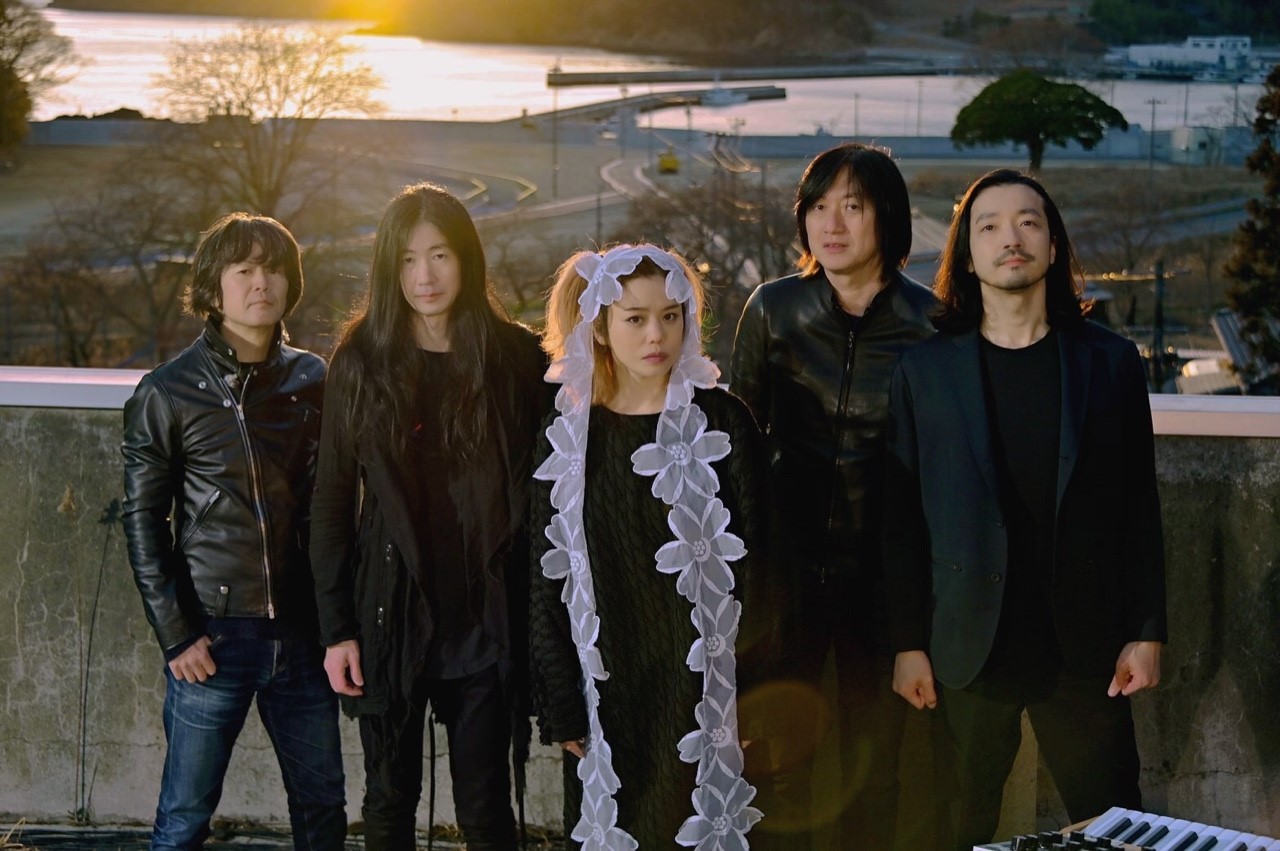
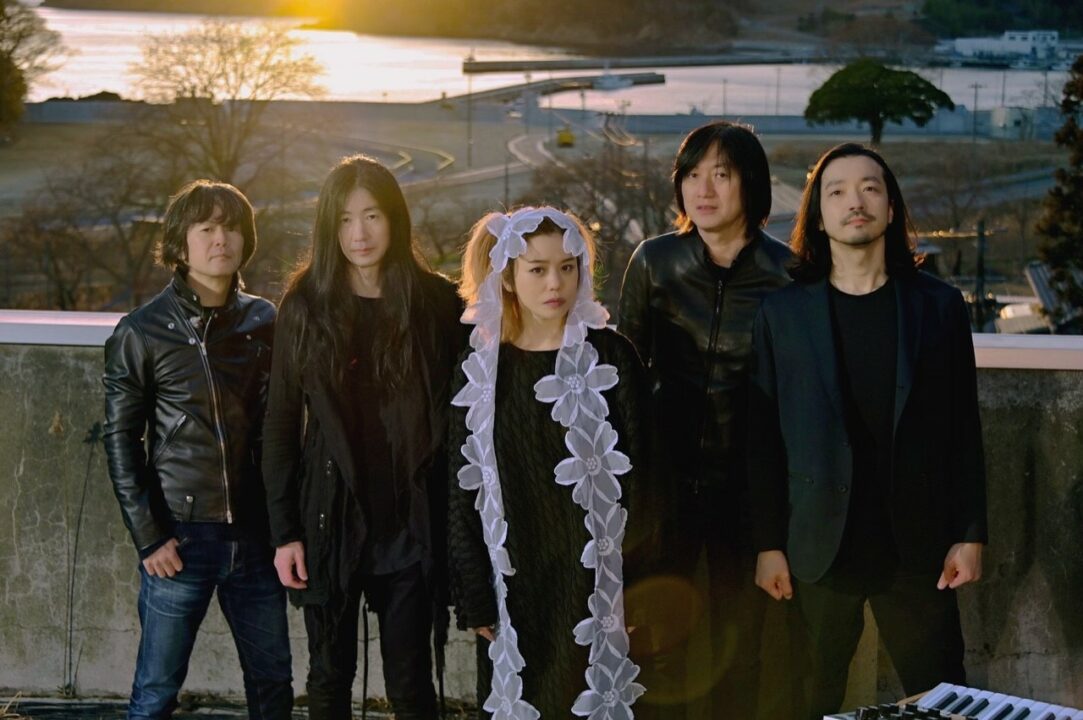
YEN TOWN BAND returned to live activity in 2015 and released “アイノネ (Ainone),” its first new single in nineteen years. A second album, diverse journey, followed in 2016. The group could now perform songs that had never existed in the original film. Chara still invoked Glico onstage, but YEN TOWN BAND was writing a history that Swallowtail Butterfly had not scripted.
That history has reached its thirtieth anniversary. Iwai’s film returned to Japanese cinemas this month in a 4K and Dolby Atmos restoration. MONTAGE will receive another vinyl edition in December, cut at half speed by Stuart Hawkes at London’s Metropolis Studios.
The film made YEN TOWN BAND feel real. MONTAGE was what kept the band going once the credits had rolled.