
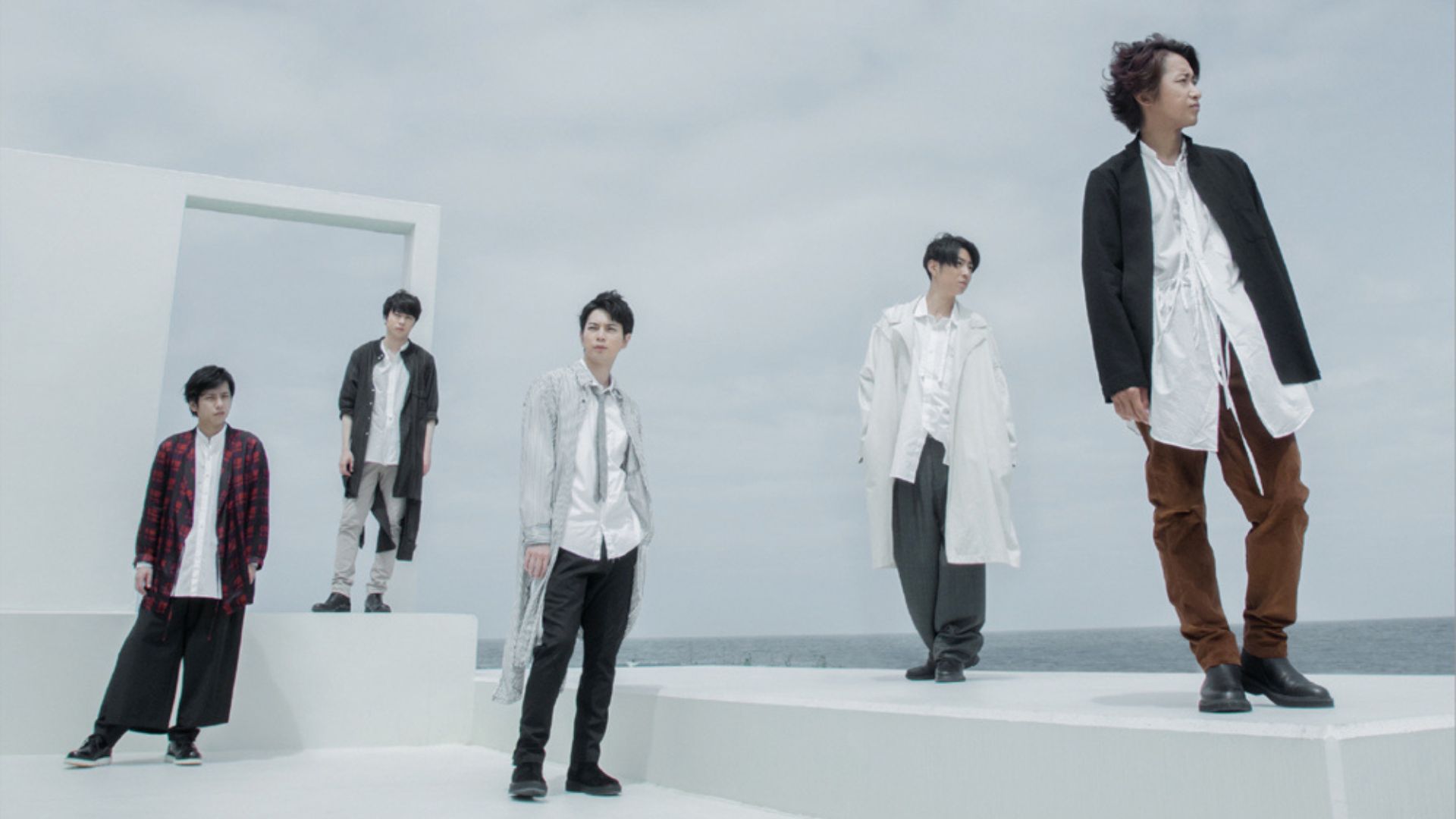

On September 14, 2016, 嵐 (Arashi) released “Power of the Paradise”, a song that viewers across Japan already associated with victories, defeats and late nights in front of the television. The Rio Olympics had ended more than three weeks earlier. The single was arriving in record shops after doing the job for which it had been created.
The song had first been performed on July 2 during Nippon TV’s THE MUSIC DAY Natsu no Hajimari. It then accompanied the network’s Olympic coverage throughout August. By the time it became Arashi’s fiftieth single, viewers had heard it around competition footage, interviews and recaps. The release did not need to introduce the song. It gave physical form to a television memory that already existed.
Its story therefore begins before September 14, inside the carefully assembled world of a television broadcaster. By 2016, Arashi had been part of that world for years.
Arashi, Sakurai and Nippon TV
Nippon TV had been using Arashi songs for its Olympic broadcasts since Athens in 2004. “Hero” was followed by 風の向こうへ (Kaze no Mukō e) for Beijing in 2008, 揺らせ、今を (Yurase, Ima o) for Vancouver in 2010, 証 (Akashi) for London in 2012 and “Road to Glory” for Sochi in 2014. Rio made “Power of the Paradise” the sixth song in that sequence.
櫻井翔 (Sho Sakurai) had also served as Nippon TV’s main Olympic presenter for five consecutive Games from Beijing to Rio. In 2016, he interviewed athletes and guided viewers through the competition while his own group supplied the theme heard around those reports.
The arrangement could easily have felt like blunt corporate synergy. It worked because Sakurai was no longer an idol briefly assigned to a sports programme. After eight years and four previous Games, he was a familiar part of Nippon TV’s Olympic coverage. Arashi’s presence followed the same logic. The broadcaster was not borrowing a popular act for one summer; it was continuing a relationship that viewers already recognised.
Rio brought all of its parts together. The presenter belonged to the group. The group performed the theme on the channel’s major summer music programme. The same channel then repeated the song beside the athletes Sakurai was covering. Artist, presenter and broadcaster reinforced one another until separating them became almost pointless.
One Olympics, several soundtracks
“Power of the Paradise” was never the official song of the Rio Olympics in Japan. There was no single Japanese soundtrack. NHK used 安室奈美恵 (Namie Amuro)’s “Hero”; TBS chose SMAP’s ありがとう (Arigatō); TV Asahi had 福山雅治 (Masaharu Fukuyama)’s “1461日” (1461 Nichi). Fuji TV and TV Tokyo also had their own themes.
Calling Arashi the sound of Rio for an entire country would erase the way Japanese audiences experienced the Games. Each broadcaster packaged the same competition with its own presenters, songs and editorial identity. A viewer following NHK heard Amuro. A viewer watching Nippon TV heard Arashi.
The event was shared; its emotional framing was divided among the networks.
For Nippon TV, “Power of the Paradise” had to survive constant reuse. Paddy’s lyrics never mention Rio, Brazil or a particular sport. They address someone who has crossed walls, endured tears and continued towards a difficult goal. Flying, trying, falling and standing again can belong to a gymnast, a swimmer or any viewer who needs the words for something less spectacular. The message was broad enough to fit the next medal sequence without tying the song to one result.
An Olympic television theme has to support triumph without becoming absurd after defeat. It may appear beneath a profile about years of training, at the end of a live broadcast and later on a concert stage. The images provide the detail that the lyrics deliberately leave open. During August 2016, Nippon TV supplied those images repeatedly.
The souvenir arrived after the celebration
When J Storm announced the single on August 5, the day of the opening ceremony in Rio, audiences still did not know whether the song would receive a standalone release. Its commercial life was decided as its television life was beginning. The two editions eventually reached stores on September 14: a limited CD and DVD edition with the music video and its making-of footage, and a regular CD edition including the B-side 花 (Hana).
The timing turned the single into a souvenir. Buying it meant recovering a song whose first context had already disappeared from the schedule. The competitions were over, the Japanese delegation had returned home and Nippon TV had moved on. The CD preserved one element of that coverage after the coverage itself had vanished.
The demand was still immediate. “Power of the Paradise” sold 422,000 copies in its first week and entered the Oricon weekly singles chart at number one. It became Arashi’s thirty-ninth consecutive chart-topping single and their forty-sixth in total. The Recording Industry Association of Japan certified it double platinum for shipments of at least 500,000 copies.
Those figures reflect Arashi’s commercial power at the time, but the single’s release date makes them more revealing. More than 400,000 copies were sold after the event that had provided the song with its daily exposure. Nippon TV had spent the summer giving the record a history before J Storm asked anyone to buy it.
What remains in 2026
Arashi ended its group activities on May 31, 2026, after a final concert at Tokyo Dome. “Power of the Paradise” now belongs to a completed career, but treating it as one more successful single in that career would miss what made Arashi unusual.
For years, the group occupied spaces in Japanese life that were larger than its albums and concerts. Its members hosted prime-time programmes, appeared in advertising campaigns and were entrusted with broadcasts designed for audiences far beyond the fan club. Olympic coverage was one of the clearest expressions of that role because it joined pop music to an event presented as a collective national experience.
“Power of the Paradise” did not become Japan’s only memory of Rio. It preserved the memory created by one broadcaster, with Sho Sakurai at the desk and Arashi surrounding its images. Ten years later, the single documents a period when a television network could repeatedly place the same pop song inside the same national event, then send it to record shops once the summer was over.