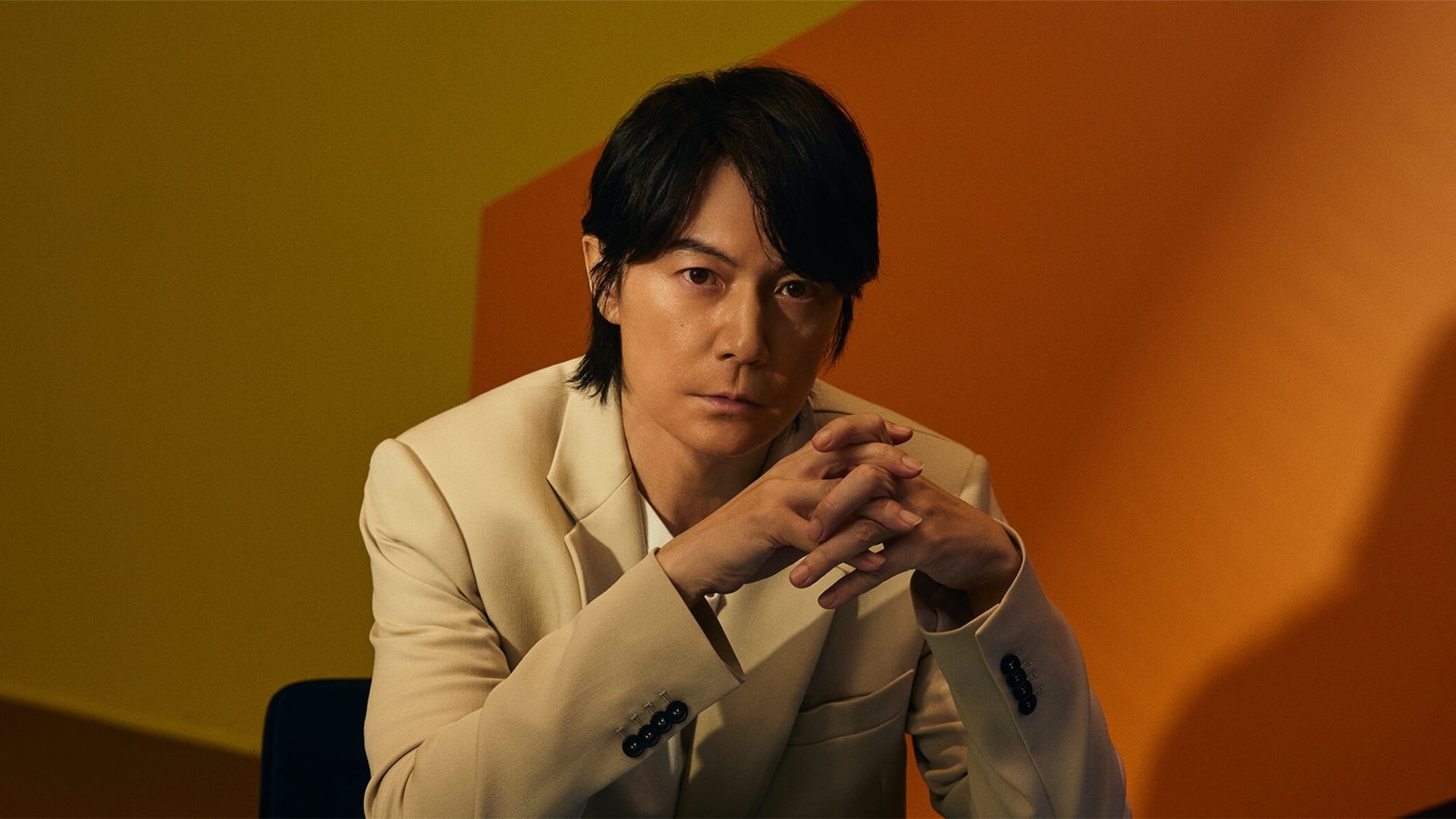

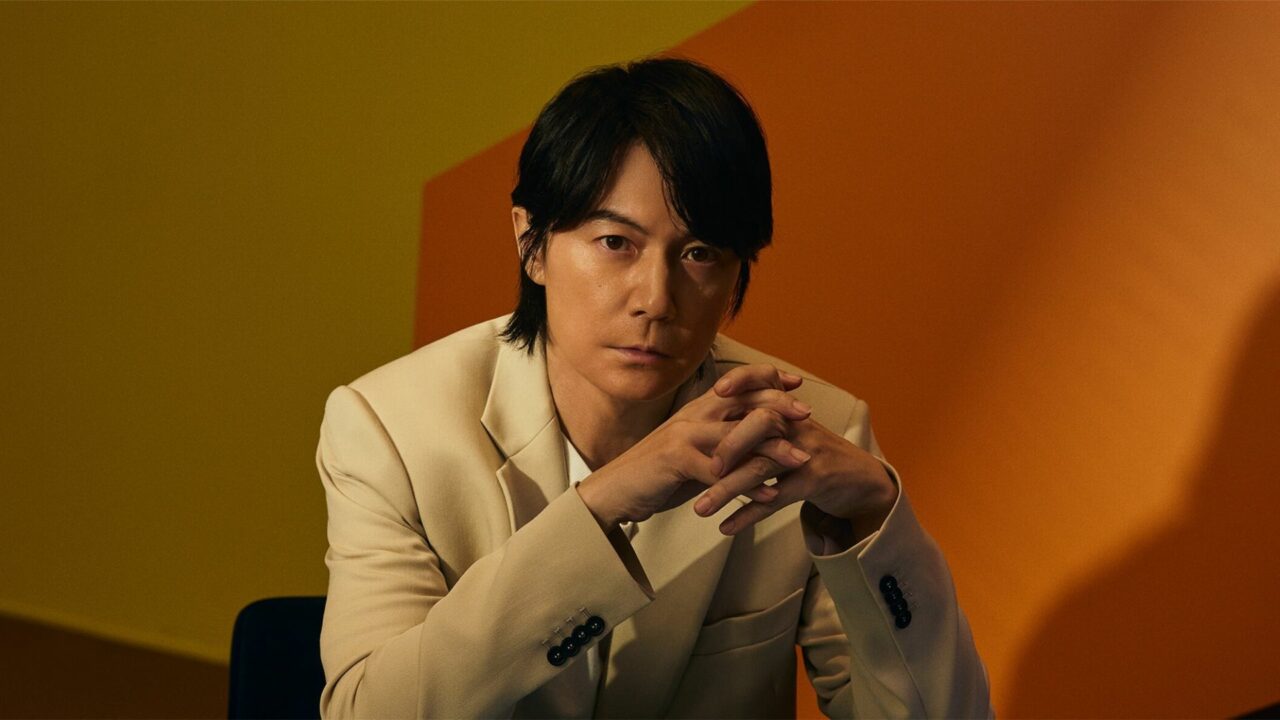
福山雅治 (Masaharu Fukuyama) releases 超新星 (Chōshinsei) on September 9, his thirteenth studio album and his first since AKIRA five years and nine months ago. Certain limited editions place this new work beside 30 years of earlier songs. Fifteen from the 1990s have been recorded again with his current band. Another 15, released between 2000 and 2020, have been newly mixed and remastered without replacing their original performances.
Both projects carry the same motto: THE LATEST IS THE GREATEST. Fukuyama is making a clear claim about the present. The release gives listeners enough material to test it.
The New Album Comes First
Chōshinsei contains 18 tracks drawn from Fukuyama’s work since 2021. Several were written for films, television dramas or advertising campaigns, including “妖 (Ayakashi),” “想望 (Sōbō),” “ひとみ (Hitomi),” “万有引力 (Ban’yū Inryoku)” and “木星 feat. 稲葉浩志 (Mokusei feat. Kōshi Inaba).” “ヒトツボシ (Hitotsuboshi),” first released by KOH+, appears here as a self-cover.
Two previously unreleased songs, “SUPERNOVA” and “ウシュクベーハー (Ushukubēhā), open the album. A piano version of “拍手喝采 (Hakushu Kassai)” is included as a bonus track. The official website lists all 18 tracks and the projects connected to them.
The distinction matters. The standard edition contains this album alone. The retrospective material belongs to two separate limited editions, each pairing Chōshinsei with a different treatment of Fukuyama’s catalogue.
That catalogue includes songs familiar across several generations in Japan: “HELLO,” “Squall,” “桜坂 (Sakurazaka),” “虹 (Niji)” and “家族になろうよ (Kazoku ni Narō yo).” Their presence gives the release an obvious commercial appeal. The work done on them is more substantial than assembling another collection of existing masters.

The 1990s Return to the Studio
THE LATEST IS THE GREATEST vol.1 begins with Fukuyama’s 1990 debut single, “追憶の雨の中 (Tsuioku no Ame no Naka),” and follows his catalogue through “MELODY,” “All My Loving,” “IT’S ONLY LOVE,” “HELLO,” “Message,” “HEAVEN” and “Squall.”
None of the original recordings are used. Fukuyama performed all 15 songs again during live studio sessions with musicians who have accompanied him for years: Akira Inoue on keyboards, Hideo Yamaki on drums, Kenji Takamizu on bass, Tsuyoshi Kon and Hirokazu Ogura on guitar, Chieko Kinbara on violin and Takuo Yamamoto on saxophone. Mizuo Miura, who has worked on Fukuyama’s records since 1993, handled the recording and mixing. A documentary about the sessions is included with the disc. The official website provides the complete lineup and tracklist.
Fukuyama and these musicians approach the songs with years of concerts behind them. Tempos, phrasing and arrangements can evolve on stage long after a studio recording has been released. Recording them again brings that experience back into the studio.
It also brings Fukuyama’s current voice. He cannot sing “HELLO” or “Squall” as the man who first recorded them because that man no longer exists. Any change in his range, delivery or interpretation belongs to the project.
The original versions retain something these sessions cannot reproduce: the exact voice, production and circumstances of their time. They also carry the memories of listeners who discovered them then. The new recordings have a different purpose. They document how Fukuyama and his band play those songs in 2026.
Whether that makes them better remains unanswered.
The 2000–2020 Recordings Are Rebuilt from Within
THE LATEST IS THE GREATEST vol.2 keeps the existing performances. The recorded material has been newly mixed and remastered rather than performed again.
Ten songs were chosen through a listener vote, including “明日の☆SHOW (Ashita no SHOW),” “道標 (Michishirube),” “最愛 (Saiai),” “Sakurazaka,” “Kazoku ni Narō yo,” “milk tea” and “少年 (Shōnen).” Fukuyama and his production team selected five others: “Niji,” “蛍 (Hotaru),” “KISSして (Kiss Shite),” “生きてる生きてく (Ikiteru Ikiteku)” and the instrumental “vs. ~知覚と快楽の螺旋~ (vs. — Chikaku to Kairaku no Rasen).” The announcement identifies which tracks came from the vote and which were added by Fukuyama’s team.
Mixing determines the balance and position of the voice and instruments. Returning to the recorded tracks can reveal details, reduce others or alter the weight of an arrangement. Remastering then prepares that new mix for current formats and listening equipment.
The performance itself remains tied to the original session. The singer heard on “Sakurazaka” has not returned to the studio. Fukuyama is changing how that voice reaches us, not replacing it with his voice at 57.
The official announcements do not explain why the catalogue was divided at the year 2000 or why each period received a different treatment. It may reflect Fukuyama’s relationship with those songs. Technical or production considerations may also have shaped the decision. The two discs show what was done; they do not establish why this boundary was chosen.
That uncertainty keeps The Latest Is the Greatest where it belongs: as Fukuyama’s ambition for the release, not a conclusion supplied by its marketing. Chōshinsei presents the musician he is now. The limited editions ask his earlier songs to stand beside it. Only listening to the original and 2026 versions in succession can establish what has genuinely changed.