
Japan entered 1996 with a departure. On New Year’s Day, globe released “DEPARTURES”; by the end of the year, the single had sold more than 2.2 million copies. Five weeks later, Mr.Children answered with “名もなき詩 (Namonaki Uta),” which finished slightly ahead of it as the year’s biggest-selling single. Between those two records lies the familiar version of 1996: monumental CD sales, television tie-ins, karaoke standards and the near-constant presence of 小室哲哉 (Tetsuya Komuro). It is an accurate picture, but it is not the whole one.
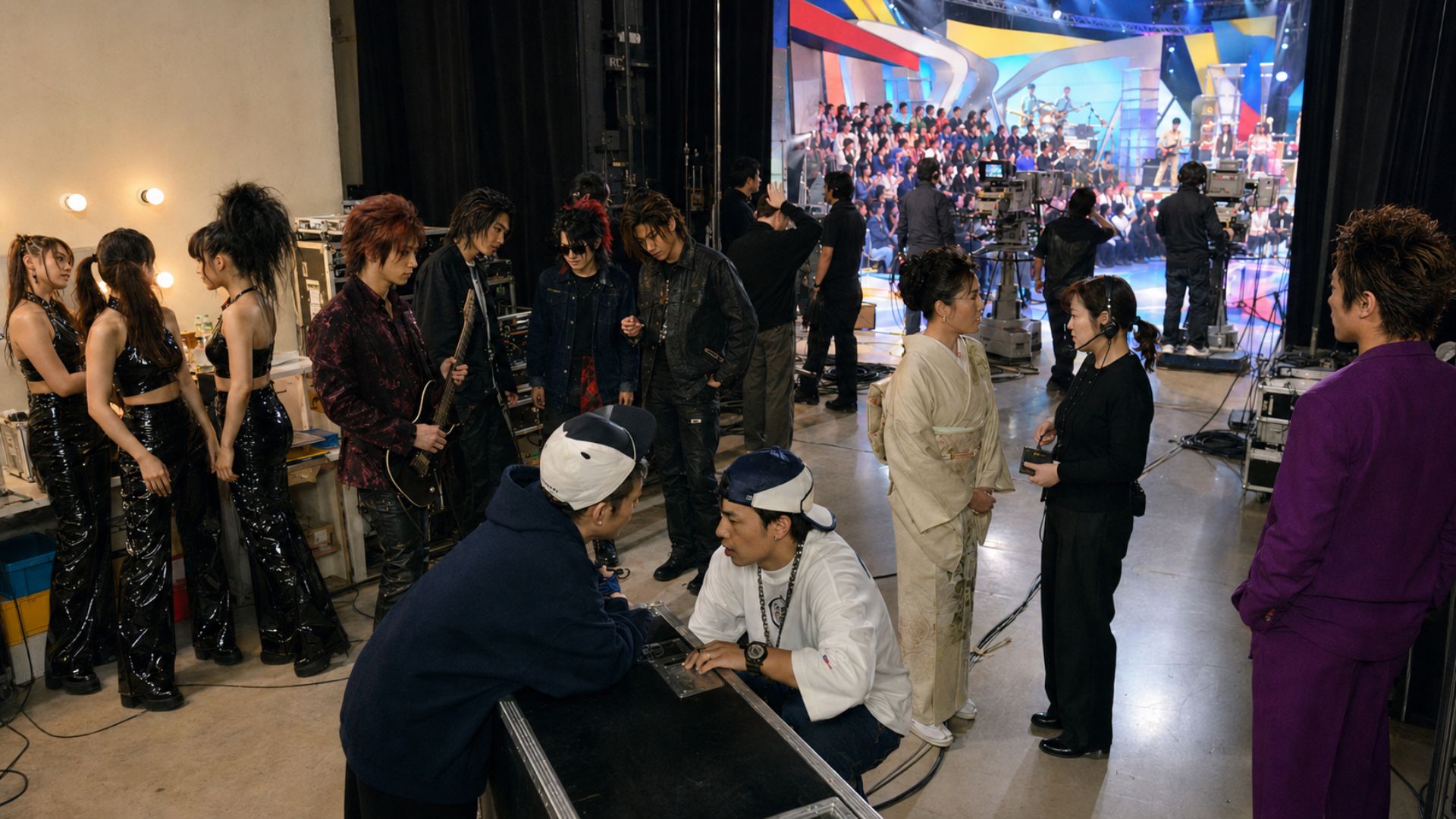
This was a worldwide moment of pop acceleration. Los del Río’s “Macarena” ruled the US Hot 100 for 14 weeks; the Fugees’ “Killing Me Softly” was Britain’s biggest seller; the Spice Girls arrived with “Wannabe”; and guitar music, R&B, hip-hop and electronic dance music were all competing for the centre. Japan heard those currents, but processed them through an unusually powerful domestic system: the slim 8cm CD single, commercial and drama tie-ins, weekly television exposure, rental shops and karaoke.
The scale was formidable. The Recording Industry Association of Japan reports domestic music-software production of 472.3 million units in 1996, worth ¥583.9 billion. That total included 166.3 million 8cm CDs—the format most closely associated with the decade’s singles—and 282.6 million 12cm CDs. The industry had not yet reached its value peak, but it was already operating close to maximum force.
Komuro was the year’s most visible architect. globe, 安室奈美恵 (Namie Amuro), 華原朋美 (Tomomi Kahara), TRF and hitomi placed one electronic-pop language across different voices and generations. Amuro’s “Don’t wanna cry” won the Japan Record Award, while “I’m proud,” “You’re my sunshine” and globe’s run of hits made TK production feel less like a style than an atmosphere.
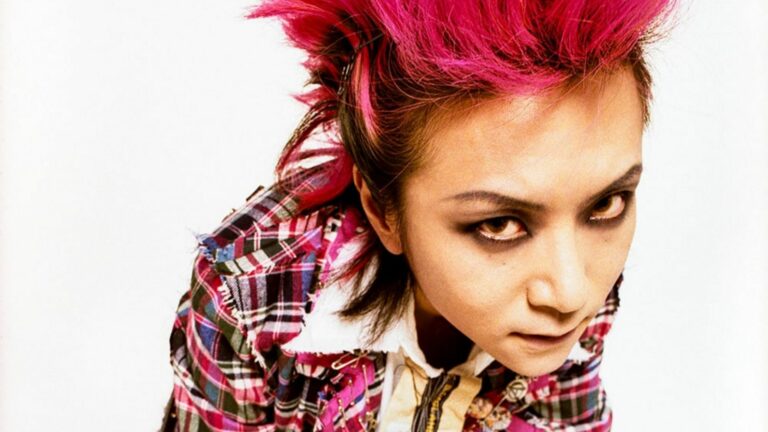
Yet 1996 also made room for counter-histories. GLAY broke decisively into the mainstream. L’Arc〜en〜Ciel, LUNA SEA, hide, 黒夢 (Kuroyume), ROUAGE, Laputa, PENICILLIN and MALICE MIZER traced several different routes through visual kei. Pizzicato Five, カヒミ・カリィ (Kahimi Karie) and 小沢健二 (Kenji Ozawa) kept the Shibuya-kei conversation mobile. BUDDHA BRAND and LAMP EYE gave Japanese-language rap two foundational records in the year of さんピンCAMP (Sanpin Camp). Fishmans and the pillows released singles whose reputations would grow far beyond their first chart positions. Enka, meanwhile, did not disappear behind youth culture: 天童よしみ (Yoshimi Tendo), 坂本冬美 (Fuyumi Sakamoto), 伍代夏子 (Natsuko Godai) and 藤あや子 (Ayako Fuji) all belong in the frame.
The wider culture was changing too. “ポケットモンスター 赤・緑 (Pokémon Red and Green)” arrived in February and the first たまごっち (Tamagotchi) in November. Television, games, toys, fashion and music increasingly travelled together. That is one reason anime and game themes sit here beside million-sellers, underground rap and veteran ballads: they did not occupy separate worlds for the people who encountered them.
This is therefore not an Oricon ranking. It is an editorial map of 100 singles that received a Japanese physical single release during the 1996 calendar year, arranged by release date. Sales and chart reach matter, but so do artistic turning points, scene impact, audiovisual circulation and long-term memory. Singles first released in 1995 are excluded even when they sold heavily in 1996—hence no “空も飛べるはず (Sora mo Toberu Hazu),” “Chase the Chance” or “Hello, Again ~昔からある場所~ (Hello, Again: Mukashi kara Aru Basho).” LAMP EYE’s entry is the one format caveat: its vinyl appeared in 1995, but the CD single belongs to 1996 and is identified as such below.
January
1. globe — DEPARTURES — January 1
The year opened with its defining TK monument. “DEPARTURES” sold roughly 2.27 million copies during 1996, finished second on Oricon’s annual chart and became globe’s signature song—large enough to make a New Year’s Day release feel like the opening statement of an era.
2. ZARD — マイ フレンド (My Friend) — January 8
Used as an ending theme for “SLAM DUNK,” “My Friend” joined anime circulation to ZARD’s already formidable pop reach. It became a million-seller and one of the clearest examples of the Being sound crossing from weekly television into lasting collective memory.
3. GLAY — グロリアス (Glorious) — January 17
“Glorious” was GLAY’s first major commercial breakthrough. Its success changed the scale around the band before “BELOVED” and “a Boy~ずっと忘れない~” followed later in the year, helping turn 1996 into the hinge between the band’s visual kei roots and national stardom.
4. 布袋寅泰 (Tomoyasu Hotei) — ラスト・シーン (Last Scene) — January 24
Hotei entered the year not as a nostalgic survivor of BOØWY but as a solo artist still capable of a major hit. “Last Scene” reached the Oricon top three and kept his precisely authored guitar-pop identity visible amid the rise of producer-led dance music.
February
5. THEE MICHELLE GUN ELEPHANT — 世界の終わり (Sekai no Owari) — February 1
The band’s major-label debut did not need blockbuster sales to redraw Japanese rock’s horizon. “Sekai no Owari” introduced THEE MICHELLE GUN ELEPHANT’s garage-rock attack nationally and began one of the decade’s most consequential rock catalogues.
6. Mr.Children — 名もなき詩 (Namonaki Uta) — February 5
The theme for the television drama “Pure” became 1996’s biggest-selling single, at approximately 2.30 million copies. Beyond the number, it captures Mr.Children at maximum cultural reach: introspective writing delivered on the scale of mass television.
7. ORIGINAL LOVE — プライマル (Primal) — February 5
Issued as the theme for the television drama “オンリー・ユー〜愛されて〜 (Only You: Aisarete),” “Primal” became ORIGINAL LOVE’s highest-charting single. It carried 田島貴男 (Takao Tajima)’s sophisticated pop writing into the Oricon top five without flattening the cosmopolitan sensibility that had made the group distinctive.
8. ウルフルズ (Ulfuls) — バンザイ〜好きでよかった〜 (Banzai: Suki de Yokatta) — February 7
Ulfuls consolidated the breakthrough begun by 1995’s “ガッツだぜ!! (Guts Da Ze!!)” with a direct declaration of love that became an enduring celebration standard. “Banzai” reached number two and proved that the year’s biggest emotions did not all require the polished architecture of a super-producer.
9. JUDY AND MARY — そばかす (Sobakasu) — February 19
The first opening theme for the television anime “Rurouni Kenshin” transformed JUDY AND MARY from a successful band into a mass phenomenon. “Sobakasu” crossed the million mark and made YUKI’s voice one of the year’s most instantly recognisable sounds.
10. 天童よしみ (Yoshimi Tendo) — 珍島物語 (Chindo Monogatari) — February 21
This was the slow-burn record the weekly-chart view can miss. “Chindo Monogatari” remained on Oricon for more than two years, eventually passed one million copies and earned Tendo the Best Vocal Performance prize at the Japan Record Awards.
11. MAX — TORA TORA TORA — February 21
MAX’s Japanese adaptation of a Eurobeat song made the group a force in its own right rather than merely 安室奈美恵 (Namie Amuro)’s former backing unit. The single’s club-derived energy also shows how deeply continental dance imports had entered mainstream Japanese pop.
12. THE HIGH-LOWS — 胸がドキドキ (Mune ga Doki Doki) — February 21
As the first opening theme for “Detective Conan,” this single linked the punk lineage of 甲本ヒロト (Hiroto Kōmoto) and 真島昌利 (Masatoshi Mashima) to a franchise just beginning its extraordinary run. The result became both a children’s television memory and a rock standard.
13. 近藤真彦 (Masahiko Kondo) — ミッドナイト・シャッフル (Midnight Shuffle) — February 21
The theme for “Kindaichi Shōnen no Jikenbo” gave Kondo his largest hit in years. Its success was also a reminder that 1996’s youth-oriented media machine could reactivate an established idol career rather than simply replace it.
14. X JAPAN — DAHLIA — February 26
After years of delays around the album of the same name, “DAHLIA” arrived as a number-one single and a concentrated display of X JAPAN’s scale. It made the band’s long gestation part of the drama rather than an obstacle to it.
15. 大黒摩季 (Maki Ohguro) — あぁ (Aa) — February 26
“Aa” extended Ohguro’s formidable run of self-authored 1990s hits. Reaching number two, it kept a muscular singer-songwriter presence near the top of a chart increasingly organised around production teams and tightly integrated media campaigns.
16. hitomi — Sexy — February 28
“Sexy” gave hitomi her first Oricon top ten entry and established her as more than a junior name in the TK constellation. The single helped make 1996 the year in which the same production system could sustain several distinct female stars at once.
17. THE YELLOW MONKEY — JAM/Tactics — February 29
This double A-side carried two different kinds of afterlife. “JAM” became one of the band’s defining songs, while “Tactics” reached a younger audience as an ending theme for “Rurouni Kenshin.” Together they pushed THE YELLOW MONKEY decisively toward the mainstream.
March
18. 華原朋美 (Tomomi Kahara) — I’m proud — March 6
Kahara’s defining ballad sold approximately 1.37 million copies and ranked eighth for the year. “I’m proud” was the emotional centre of the TK boom: technically demanding, publicly ubiquitous and inseparable from the star narrative surrounding its singer.
19. B’z — ミエナイチカラ ~INVISIBLE ONE~/MOVE (Mienai Chikara ~INVISIBLE ONE~ / MOVE) — March 6
B’z answered the dance-pop tide with a double A-side that still sold at million scale. “Mienai Chikara” also travelled through anime as an ending theme for “Hell Teacher Nūbē,” underlining the band’s reach across rock audiences and family television.
20. FIELD OF VIEW — DAN DAN 心魅かれてく (DAN DAN Kokoro Hikareteku) — March 11
As the opening theme for “Dragon Ball GT,” this song entered an international memory far larger than its original chart cycle. Written by ZARD’s 坂井泉水 (Izumi Sakai), it also makes visible the dense network of writers and performers inside the Being ecosystem.
21. 安室奈美恵 (Namie Amuro) — Don’t wanna cry — March 13
Amuro’s first million-selling solo single of the year won the Grand Prix at the 38th Japan Record Awards. It confirmed that her ascent was not a brief fashion cycle and placed a teenage woman at the symbolic centre of Japanese pop.
22. PENICILLIN — Blue Moon/天使よ目覚めて (Tenshi yo Mezamete) — March 15
PENICILLIN’s major-label debut brought another strand of visual kei into wider circulation. The double A-side belongs here not because it matched the year’s million-sellers, but because 1996 was when the scene’s major-label pipeline visibly widened.
23. Pizzicato Five — ベイビィ・ポータブル・ロック (Baby Portable Rock) — March 20
Used in a Nissan Mistral commercial, “Baby Portable Rock” carried Pizzicato Five’s hyper-designed pop into everyday advertising. Its top-20 chart showing made Shibuya-kei’s sense of style audible well beyond specialist record shops.
24. TRF — Love & Peace Forever — March 21
TRF were already one of the TK era’s great early successes, and this number-two single showed they could remain central as newer protégées arrived. It is a useful bridge between the first dance boom and the more personality-driven pop of 1996.
25. LUNA SEA — END OF SORROW — March 25
“END OF SORROW” reached number one and opened the band’s “STYLE” era with maximum visibility. LUNA SEA’s success demonstrated that ambitious, image-conscious rock could command the same chart summit as the year’s television-built pop.
26. 坂本冬美 (Fuyumi Sakamoto) — 螢の提灯 (Hotaru no Chōchin) — March 27
Sakamoto’s single was selected for the Japan Record Awards and kept contemporary enka in the year’s awards conversation. Its presence also resists the misleading idea that the 1996 market belonged exclusively to teenagers and dance-pop consumers.
27. globe — FREEDOM — March 27
Released the same week as globe’s debut album, “FREEDOM” reached number three while that album moved toward sales of roughly four million. It captures the speed of the group’s expansion: a new single was already extending the story created by “DEPARTURES.”
April
28. スピッツ (Spitz) — チェリー (Cherry) — April 10
“Cherry” sold more than 1.6 million copies and finished fourth on the annual chart. Its continued life in karaoke, school bands and cover versions has made it feel almost folkloric, but in 1996 it was also a precisely timed commercial peak.
29. Mr.Children — 花 -Mémento-Mori- (Hana -Mémento-Mori-) — April 10
Released on the same day as “Cherry,” “Hana” sold more than 1.5 million copies and finished fifth for the year. The subtitle matters: beneath the scale of the hit sat an explicit meditation on mortality, hardly the safest route to mass appeal.
30. DEEN — ひとりじゃない (Hitori ja Nai) — April 15
The first ending theme for “Dragon Ball GT” gave DEEN another top-five single and paired naturally with FIELD OF VIEW’s opening theme. Together, the two songs show how the Being network could frame an entire broadcast and extend it into record shops.
31. 相川七瀬 (Nanase Aikawa) — LIKE A HARD RAIN — April 17
Aikawa’s third single reached the top five and sharpened the rock identity established by her 1995 debut. Before “Koigokoro” became her largest hit in autumn, this was the record that proved the breakthrough could be sustained.
32. エレファントカシマシ (Elephant Kashimashi) — 悲しみの果て (Kanashimi no Hate) — April 19
The band’s first single for Pony Canyon began a remarkable second act after a period without a label. Its initial chart performance was modest, but “Kanashimi no Hate” became an enduring signature and one of Japanese rock’s great stories of persistence.
33. 伍代夏子 (Natsuko Godai) — 鳴門海峡 (Naruto Kaikyō) — April 21
Godai’s geographically rooted enka ballad became one of her representative songs and received a Japan Record Awards selection. In a list crowded with urban media tie-ins, “Naruto Kaikyō” preserves another map of Japanese popular listening.
34. 松田聖子 (Seiko Matsuda) — あなたに逢いたくて~Missing You~/明日へと駆け出してゆこう (Anata ni Aitakute ~Missing You~ / Ashita e to Kakedashite Yukō) — April 22
Sixteen years after her debut, Matsuda scored the largest-selling single of her career and her first million-seller. The self-written double A-side reached number one, overturning any easy assumption that 1996’s rapid generational change had left the defining idol of the 1980s behind.
35. MY LITTLE LOVER — ALICE — April 22
After the enormous 1995 success of “Hello, Again,” “ALICE” showed that MY LITTLE LOVER could carry momentum into a new year. The number-two single kept 小林武史 (Takeshi Kobayashi)’s carefully layered pop at the heart of the mainstream.
36. ROUAGE — Queen — April 22
ROUAGE’s major debut is one of the records that makes 1996 look different when visual kei is treated as a scene rather than reduced to its eventual arena acts. “Queen” marked the transition from Nagoya’s independent circuit to national distribution.
37. シャ乱Q (Sharam Q) — いいわけ (Iiwake) — April 24
The theme for the drama “Age, 35” reached number three and approached one million copies. Its mixture of melodrama and band personality made it one of the year’s unavoidable television-to-karaoke transmissions.
38. 林原めぐみ (Megumi Hayashibara) — Give a reason — April 24
The opening theme for “Slayers NEXT” reached the Oricon top ten and earned a gold certification. It was a landmark in the movement of voice-actor music from a specialist market toward the centre of the singles chart.
May
39. 川本真琴 (Makoto Kawamoto) — 愛の才能 (Ai no Sainō) — May 2
Kawamoto’s debut single immediately announced a writer and performer with her own rhythmic logic. Reaching the Oricon top 20, “Ai no Sainō” opened a short but highly distinctive major-label run that would peak commercially the following year.
40. ZARD — 心を開いて (Kokoro o Hiraite) — May 6
A Pocari Sweat commercial carried “Kokoro o Hiraite” through the summer, while the single itself reached number one. ZARD’s second appearance here confirms how reliably 坂井泉水 (Izumi Sakai) could turn polished Being pop into songs that outlived their campaigns.
41. PUFFY — アジアの純真 (Asia no Junshin) — May 13
PUFFY’s debut sold more than one million copies and made 大貫亜美 (Ami Onuki) and 吉村由美 (Yumi Yoshimura) immediate pop figures. With lyrics by 井上陽水 (Yosui Inoue) and music and production by 奥田民生 (Tamio Okuda), it also joined two generations of idiosyncratic songwriting to a deliberately unforced new star image.
42. T.M.Revolution — 独裁 -monopolize- (Dokusai -monopolize-) — May 13
T.M.Revolution’s debut single introduced 西川貴教 (Takanori Nishikawa)’s voice and his production partnership with 浅倉大介 (Daisuke Asakura). Its chart position was modest, but the launch matters because the project would move from newcomer to anime-powered national success within six months.
43. 久保田利伸 (Toshinobu Kubota) with NAOMI CAMPBELL — LA・LA・LA LOVE SONG — May 13
As the theme for the drama “Long Vacation,” the single sold approximately 1.84 million copies and ranked third for the year. Kubota brought an established Japanese R&B vocabulary to prime-time television without diluting the musicianship that had built his career.
44. B’z — Real Thing Shakes — May 15
B’z released an all-English-language single, recorded in Los Angeles and produced by Andy Johns, and still took it to number one with sales above one million. “Real Thing Shakes” was both a commercial certainty and a conspicuous international-rock experiment.
45. 小沢健二 (Kenji Ozawa) — ぼくらが旅に出る理由 (Bokura ga Tabi ni Deru Riyū) — May 16
Originally heard on the 1994 album “LIFE,” this revised single version carried Ozawa’s writing into 1996 through a television-drama tie-in. It stands at the warmer, orchestral end of Shibuya-kei and has since become one of his most covered songs.
46. サザンオールスターズ (Southern All Stars) — 愛の言霊 ~Spiritual Message~ (Ai no Kotodama ~Spiritual Message~) — May 20
Southern All Stars placed a veteran band at number seven on the annual chart with sales near 1.4 million. The “透明人間 (Tōmei Ningen)” drama theme folded Japanese wordplay and global rhythmic references into a hit that sounded like nobody but them.
47. BUDDHA BRAND — 人間発電所 ~プロローグ (Ningen Hatsudensho ~Prologue) — May 22
BUDDHA BRAND’s major debut is one of the foundational records of Japanese-language hip-hop. Released weeks before Sanpin Camp brought the scene to Hibiya Open-Air Concert Hall, it gave the year a rap landmark no pop-sales ranking can adequately measure.
48. 電気グルーヴ (Denki Groove) — 誰だ! (Radio Edit) (Dare da! [Radio Edit]) — May 22
Chosen as an opening theme for NHK’s “Pop Jam,” “Dare da!” placed Denki Groove’s electronic absurdism inside a national music programme. That collision between club culture and television comedy is precisely why the single belongs to 1996’s wider map.
49. hitomi — In the future — May 22
Three months after “Sexy,” hitomi returned to the top ten. “In the future” consolidated her place inside the TK wave while the title’s forward-facing stance suited a year in which the producer’s roster seemed to expand with every chart cycle.
June
50. 安室奈美恵 (Namie Amuro) — You’re my sunshine — June 5
Another million-scale number-one single, “You’re my sunshine” made Amuro’s spring breakthrough look permanent. It also helped shift the centre of idol-pop toward a more self-possessed young woman whose style was being copied as closely as her songs were sung.
51. カヒミ・カリィ (Kahimi Karie) — ハミングがきこえる (Humming ga Kikoeru) — June 9
Written by さくらももこ (Momoko Sakura) and composed and arranged by 小山田圭吾 (Keigo Oyamada), this opening theme for “Chibi Maruko-chan” carried Kahimi Karie’s intimate vocal persona into Sunday-evening family television. Few records better illustrate how porous the borders around Shibuya-kei could be.
52. 森高千里 (Chisato Moritaka) — ララ サンシャイン (La La Sunshine) — June 10
The theme for Fuji TV’s morning programme “Mezamashi TV” reached the top five. Moritaka’s bright everyday writing made an ideal daily broadcast companion, and the repeated exposure gave the single a life measured in routines as much as chart weeks.
53. UA — 情熱 (Jōnetsu) — June 21
“Jōnetsu” was UA’s first substantial commercial breakthrough and remains an essential Japanese soul recording of the decade. Its success opened space for an adult, rhythm-led vocal presence that did not fit the year’s dominant idol or band templates.
54. 奥田民生 (Tamio Okuda) — イージュー★ライダー (Ījū★Rider) — June 21
The title puns studio slang for “30” on “Easy Rider,” matching a song about freedom without adolescent posturing. A top-five hit and a long-term road-song standard, it arrived just as Okuda’s production work was launching PUFFY.
55. 髙橋真梨子 (Mariko Takahashi) — ごめんね… (Gomen ne…) — June 21
Used as the 15th theme for Nippon TV’s long-running “火曜サスペンス劇場 (Kayō Suspense Gekijō),” the song became Takahashi’s best-selling solo single. Its karaoke afterlife makes it one of the clearest bridges between adult pop and the year’s mass listening culture.
56. the pillows — ストレンジ カメレオン (Strange Chameleon) — June 21
Its original chart reach was limited, but “Strange Chameleon” marked an artistic reset for the pillows and became one of the band’s defining songs. This is exactly the kind of record a retrospective loses when it treats first-week sales as destiny.
57. hide — MISERY — June 24
Reaching number three, “MISERY” strengthened hide’s solo identity alongside his work in X JAPAN. The record’s colourful presentation and direct uplift offered a different visual kei vocabulary from the grand scale associated with his band.
58. 氷室京介 (Kyosuke Himuro) — STAY — June 24
“STAY” reached number one and served as a “COUNT DOWN TV” opening theme. Almost a decade after BOØWY’s dissolution, Himuro remained a current chart artist, not simply a foundational name cited by the younger bands around him.
July
59. X JAPAN — Forever Love — July 8
One of X JAPAN’s most enduring ballads, “Forever Love” reached number one and ranked among the year’s 20 biggest sellers. Its later ceremonial and political uses expanded the song’s public life far beyond the band’s own audience.
60. 大黒摩季 (Maki Ohguro) — 熱くなれ (Atsuku Nare) — July 8
NHK used “Atsuku Nare” for its coverage of the Atlanta Olympic Games, giving Ohguro an unusually direct link to the year’s global sporting event. The number-one single turned exhortation into a national summer soundtrack.
61. L’Arc〜en〜Ciel — 風にきえないで (Kaze ni Kienaide) — July 8
L’Arc〜en〜Ciel reached the Oricon top five for the first time with this single. It was the clearest sign yet that the band’s melodic approach to visual kei could travel well beyond its early following, months before “flower” pushed the case further.
62. スチャダラパー (Scha Dara Parr) — アクア フレッシュ (Aqua Fresh) — July 10
Arriving in the week of Sanpin Camp, “Aqua Fresh” represents a conversational, playful branch of Japanese rap distinct from the event’s harder declarations. Its top-40 showing kept hip-hop present in the commercial singles field without making the scene stylistically uniform.
63. THE YELLOW MONKEY — SPARK — July 10
“SPARK” reached the Oricon top three and gave THE YELLOW MONKEY the decisive hit promised by “JAM.” The band’s theatricality was no longer a cult proposition: it had become part of the year’s mainstream rock language.
64. SMAP — 青いイナズマ (Aoi Inazuma) — July 15
SMAP’s first single after moving into the era of “SMAP×SMAP” became a number-one hit and one of 1996’s biggest sellers. More than an idol record, it helped define the group’s durable fusion of music, variety television and individual celebrity.
65. 玉置浩二 (Koji Tamaki) — 田園 (Denen) — July 21
Used as the theme for the drama “Coach,” “Denen” became Tamaki’s signature solo hit and a 30-week chart presence. Its success reintroduced a major 1980s voice to 1990s audiences on emphatically contemporary terms.
66. YEN TOWN BAND — Swallowtail Butterfly ~あいのうた~ (Swallowtail Butterfly ~Ai no Uta~) — July 22
The fictional band from 岩井俊二 (Shunji Iwai)’s film “Swallowtail” escaped the screen when this song reached number one. Chara’s vocal and 小林武史 (Takeshi Kobayashi)’s production made the boundary between soundtrack, character and pop act productively unstable.
August
67. SPEED — Body & Soul — August 5
SPEED’s debut introduced four Okinawan teenagers with a level of vocal and dance assurance that immediately separated them from conventional idol-group expectations. The top-five single laid the groundwork for an even larger breakthrough before year’s end.
68. Every Little Thing — Feel My Heart — August 7
Every Little Thing’s debut did not yet reveal how dominant the trio would become, but it established the core combination of 持田香織 (Kaori Mochida)’s voice, 五十嵐充 (Mitsuru Igarashi)’s writing and a bright digital production style built for late-1990s pop.
69. GLAY — BELOVED — August 7
“BELOVED” reached the top three and gave GLAY the title song for the million-selling album that followed in November. Where “Glorious” announced the breakthrough, this single made the band’s coming arena scale feel inevitable.
70. 藤井フミヤ (Fumiya Fujii) — Another Orion — August 7
The theme for the drama “硝子のかけらたち (Garasu no Kakera-tachi)” became a number-one single and one of Fujii’s largest solo hits. It confirmed that his post-Checkers career could generate its own standards rather than live on inherited fame.
71. 安室奈美恵 (Namie Amuro) — SWEET 19 BLUES — August 21
Issued after the blockbuster album of the same name, this single turned an album title into shorthand for a generation negotiating youth, independence and visibility. “SWEET 19 BLUES” is where the sales phenomenon becomes a cultural self-portrait.
72. 藤あや子 (Ayako Fuji) — 紅 (Beni) — August 21
“Beni” earned a place among the Japan Record Awards’ selected works and became one of Fuji’s representative singles. Alongside the other enka entries in this selection, it shows the genre responding to 1996 from within its own durable star system.
73. globe — Is this love — August 28
globe’s third entry in this selection reached number one and kept the group’s singles narrative moving after its enormous debut album. The question in the title suited a year when KEIKO’s voice increasingly carried the emotional weight of the group’s constructions.
September
74. ポケットビスケッツ (Pocket Biscuits) — YELLOW YELLOW HAPPY — September 4
Created through the variety programme “ウッチャンナンチャンのウリナリ!! (Ucchan Nanchan no Urinari!!),” Pocket Biscuits turned television comedy into a genuine pop phenomenon. The single sold above one million, proving that a programme-born unit could compete with the year’s premier recording acts.
75. スピッツ (Spitz) — 渚 (Nagisa) — September 9
Spitz followed “Cherry” with their first number-one single. “Nagisa” prevented the year’s spring success from becoming a single-song story and completed a remarkable 1996 in which the band’s understated writing achieved stadium-scale recognition.
76. V6 — TAKE ME HIGHER — September 16
The opening theme for “Ultraman Tiga,” starring V6 member 長野博 (Hiroshi Nagano), connected the group to the return of one of Japan’s foundational television heroes. The number-one single remains a durable meeting point between idol pop and tokusatsu culture.
77. 爆風スランプ (Bakufu Slump) — 旅人よ ~The Longest Journey~ (Tabibito yo ~The Longest Journey~) — September 21
Associated with the “Susume! Denpa Shōnen” travel project that made Saruganseki a national story, “Tabibito yo” returned Bakufu Slump to broad public attention. The veteran band found a new media context without pretending to be a new act.
78. Fishmans — SEASON — September 25
The single version of “SEASON” became the seed for the album-length “LONG SEASON” released a month later. Its initial commercial footprint was small; its subsequent reputation made it central to the international rediscovery of Fishmans and 1990s Japanese alternative music.
79. Laputa — 硝子の肖像 (Garasu no Shōzō) — September 30
Laputa’s major-label debut carried another Nagoya-rooted visual kei band into national distribution. Placed beside ROUAGE, PENICILLIN and MALICE MIZER, it documents the breadth of a scene too often narrated only through the acts that later filled stadiums.
October
80. 華原朋美 (Tomomi Kahara) — save your dream — October 2
Kahara’s second entry here also reached number one and sold close to one million copies. “save your dream” gave her 1996 story a more forward-moving counterpart to “I’m proud” and confirmed that the earlier phenomenon was repeatable.
81. PUFFY — これが私の生きる道 (Kore ga Watashi no Ikiru Michi) — October 7
PUFFY’s second single also crossed one million and won the pair the Best New Artist prize at the Japan Record Awards. Written and produced by 奥田民生 (Tamio Okuda), it turned apparent casualness into a highly crafted alternative to conventional idol presentation.
82. 相川七瀬 (Nanase Aikawa) — 恋心 (Koigokoro) — October 7
“Koigokoro” became Aikawa’s largest-selling single, reaching number two and passing one million copies. With “LIKE A HARD RAIN” in spring, it completed one of the year’s strongest arcs from promising newcomer to established rock-pop star.
83. 酒井法子 (Noriko Sakai) — 鏡のドレス (Kagami no Dress) — October 9
The theme for “続・星の金貨 (Zoku: Hoshi no Kinka)” gave Sakai another major drama ballad after 1995’s “碧いうさぎ (Aoi Usagi).” Its success belongs to the year’s continuing alliance between serial television and emotionally direct adult idol-pop.
84. MALICE MIZER — ma chérie ~愛しい君へ~ (ma chérie ~Itoshii Kimi e~) — October 10
Still an independent release, “ma chérie” captured MALICE MIZER during the Gackt era before the band’s major-label breakthrough. Its inclusion recognises how visual kei’s influence circulated through dedicated fan communities as well as national charts.
85. L’Arc〜en〜Ciel — flower — October 17
“flower” became one of L’Arc〜en〜Ciel’s early signature songs and another top-five hit. With “Kaze ni Kienaide” and November’s “Lies and Truth,” it made the second half of 1996 the band’s most decisive step toward the front rank of Japanese rock.
86. 松澤由美 (Yumi Matsuzawa) — YOU GET TO BURNING — October 23
Matsuzawa’s debut single opened the television anime “Martian Successor Nadesico.” The song’s durable convention, karaoke and cover life demonstrates how an anime theme could become canonical even without approaching the year’s million-selling tier.
87. JUDY AND MARY — クラシック (Classic) — October 28
Reaching number three, “Classic” proved that JUDY AND MARY’s year could not be reduced to the anime-assisted explosion of “Sobakasu.” The band now had a mainstream audience willing to follow its own catalogue on its own terms.
88. globe — Can’t Stop Fallin’ in Love — October 30
globe closed October with another number-one single and one of the group’s largest ballads. Its sales continued deep into 1997, but the release belongs to the winter of 1996, when globe’s dominance seemed capable of renewing itself indefinitely.
November
89. 今井美樹 (Miki Imai) — PRIDE — November 4
Written and produced by 布袋寅泰 (Tomoyasu Hotei) for the drama “ドク (Doku),” “PRIDE” became Imai’s signature and best-selling single. Released late in the year, it grew across the winter rather than peaking as a short campaign.
90. 岡本真夜 (Mayo Okamoto) — Alone — November 5
“Alone” reached the top ten and spent 17 weeks on Oricon, giving Okamoto a durable follow-up to her enormous 1995 debut. Its long ballad afterlife matters more than a simple comparison with the year’s first-week blockbusters.
91. 工藤静香 (Shizuka Kudo) — 激情 (Gekijō) — November 7
中島みゆき (Miyuki Nakajima) wrote and composed “Gekijō” for the drama “ゆずれない夜 (Yuzurenai Yoru),” in which Kudo starred. The top-ten single renewed one of the previous decade’s major idol careers through an adult dramatic register.
92. T.M.Revolution — HEART OF SWORD ~夜明け前~ (HEART OF SWORD ~Yoake Mae~) — November 11
Selected as an ending theme for “Rurouni Kenshin,” T.M.Revolution’s third single became the project’s first long-running hit. In six months, 西川貴教 (Takanori Nishikawa) and 浅倉大介 (Daisuke Asakura) had moved from a new launch to a record embedded in anime history.
93. SOPHIA — Believe — November 11
“Believe” became one of SOPHIA’s defining early singles and expanded the band’s audience during visual kei’s rapid commercial opening. Its chart scale was smaller than GLAY’s or LUNA SEA’s, but the scene’s history was never a two-band race.
94. SPEED — STEADY — November 18
SPEED’s second single reached number one and sold above one million copies. If “Body & Soul” introduced the group, “STEADY” made clear that four teenage performers from Okinawa Actors School would help shape the rest of the decade.
95. 黒夢 (Kuroyume) — Like @ Angel — November 18
“Like @ Angel” reached the top five and became a defining song of Kuroyume’s increasingly direct rock phase. The shift was influential precisely because the band did not stay fixed inside the sound or presentation of its earlier visual kei identity.
96. SMAP — SHAKE — November 18
SMAP’s second number-one single of the year turned the energy of “SMAP×SMAP” into a title that still functions as communal pop. “Aoi Inazuma” and “SHAKE” together established the multimedia model that would sustain the group for two decades.
97. LAMP EYE — 証言 (Shōgen) — November 25
The vinyl first appeared in 1995; this date is the 1996 CD-single issue. Built as a relay of verses from Rino, You the Rock★, G.K. Maryan, Zeebra, Twigy, Gama and Dev Large, “Shōgen” became a foundational Japanese-rap posse cut and an emblem of the Sanpin Camp generation.
98. DREAMS COME TRUE — そうだよ/誘惑 (Sō da yo / Yūwaku) — November 25
DREAMS COME TRUE’s 20th single kept one of Japan’s largest pop acts in the 1996 picture during a period of transition. The double-sided release reached the top five and pointed toward the more outward-facing “SING OR DIE” phase that followed.
99. 安室奈美恵 (Namie Amuro) — a walk in the park — November 27
Amuro ended her extraordinary release year with another number-one million-seller. Its chart life extended into 1997, but “a walk in the park” belongs to the point when her 1996 transformation—from rising star to generational reference—was complete.
December
100. 真宮寺さくら(横山智佐)&帝国歌劇団 (Sakura Shinguji [Chisa Yokoyama] & Teikoku Kagekidan) — 檄!帝国華撃団 (Geki! Teikoku Kagekidan) — December 18
The theme from Sega’s “Sakura Wars” reached number 15 and became one of Japanese game music’s most enduring anthems. Ending here is deliberate: 1996’s future was not confined to the record industry. It was already moving through characters, consoles, stages and fan communities.
What 1996 left behind
The temptation with 1996 is to turn it into a monument to abundance: more CDs, more million-sellers, more stars large enough to dominate a shared television culture. The figures justify that reading, but the 100 singles above suggest something more useful. The year mattered because many systems were working at once.
The mainstream was concentrated enough for “Namonaki Uta,” “DEPARTURES” and “LA・LA・LA LOVE SONG” to become common national reference points. At the same time, the edges were producing records that would outgrow their original scale: “SEASON,” “Strange Chameleon,” “Ningen Hatsudensho,” “Shōgen,” “Kanashimi no Hate.” Anime and game themes were becoming durable catalogues of their own. Enka still had room for long sellers. Visual kei was not one sound but a network of bands moving at different speeds.
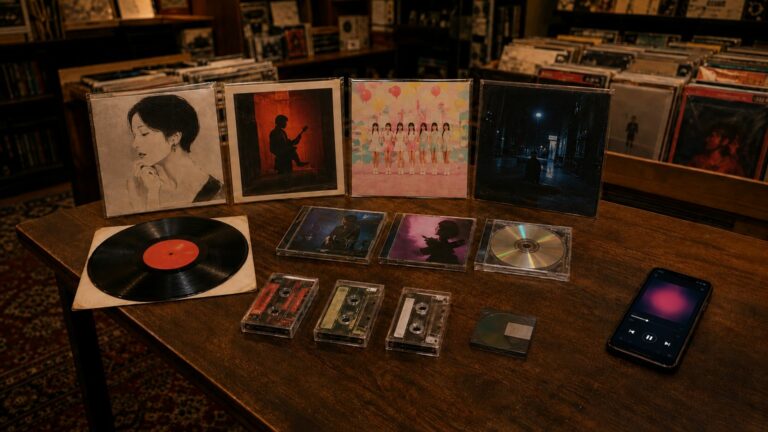
Thirty years later, the physical world that created these singles can feel remote. The 8cm cases, rental counters and fixed broadcast schedules have gone or diminished. The songs have not. Some survive because millions bought them immediately; others because listeners kept finding them after the charts stopped looking. A truthful portrait of 1996 needs both kinds of memory.
Editorial methodology and principal sources
This selection was compiled from Japanese physical-release dates and then audited across sales, awards, karaoke memory, scene history, media tie-ins and later reception. Exact sales figures are used only where the available chart source supports them; RIAJ production figures describe manufacturer shipments, not consumer purchases.
Market, charts and awards
- RIAJ — Music software production by format: 1996 unit and production-value totals, including 8cm and 12cm CD production.
- Oricon annual 1996 chart mirror at Amigo: year-end ranks, release dates and estimated sales for the leading singles; checked against individual Oricon product pages where needed.
- JOYSOUND — retrospective 1996 hit-song ranking: a separate view of songs embedded in the year’s shared repertoire.
- Japan Composer’s Association — 38th Japan Record Awards: Grand Prix, vocal, newcomer and selected-work results.
- Rolling Stone Japan — history of J-pop, 1996–97: retrospective context on the TK boom and globe’s sales scale.
International and cultural frame
- Official Charts Company — Britain’s best-selling singles of 1996.
- History — “Macarena” begins its 14-week US chart reign.
- The Pokémon Company — the 1996 launch of “Pokémon Red and Green”.
- Bandai — Tamagotchi history.
- JOYSOUND / Natalie — the origins of Sanpin Camp.
Discography and release-date verification
- Official artist and label discographies were prioritised, including GLAY, L’Arc〜en〜Ciel, SPEED, SMAP at Victor, T.M.Revolution, Tamio Okuda at Sony Music, DREAMS COME TRUE and Shizuka Kudo.
- Oricon’s Japanese product database was used as a release-date and chart cross-check for singles without a stable official archive page.