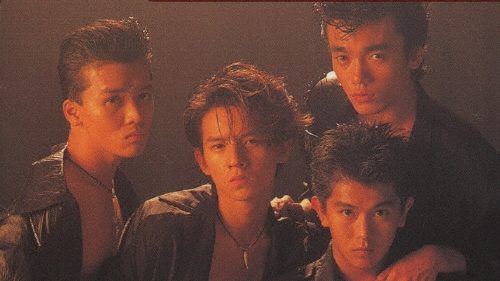

In 1996, two Japanese musicians travelled to India to find a pair of hitchhikers and play them a song. BAKUFU-SLUMP (爆風スランプ) singer Sunplaza Nakano (サンプラザ中野, now Sunplaza Nakano-kun) and guitarist Pappara Kawai (パッパラー河合) had written “Tabibito yo ~The Longest Journey~” (旅人よ~The Longest Journey) for two men they had never met. Finding them would be another adventure.
The travellers were Saruganseki (猿岩石), the comedy duo of Hiroiki Ariyoshi (有吉弘行) and Kazunari Moriwaki (森脇和成). For Nippon TV's Susume! Denpa Shōnen, they were hitchhiking across Eurasia from Hong Kong to London, looking for lifts and taking whatever work they could find along the way. Their exhaustion, uncertainty and occasional moments of kindness became part of a story watched across Japan.
Nakano and Kawai had initially been invited to encourage the pair. After seeing footage of Saruganseki crying with relief on a truck in Vietnam, Nakano proposed writing a song to take with them. In India, they discovered that the show's producers expected them to find the two men themselves. Nakano laughed about that unexpected assignment in a 2024 interview with TBS.
They eventually met the travellers and performed their new song in front of them. The encounter moved the duo to tears. Remarkably, the original CD single would later include the unplugged recording of that performance, alongside the finished studio version.
A different kind of encouragement
The song never uses ganbare, the familiar Japanese call to try harder or keep going. Its lyrics are not free of struggle or obligation: they describe the need to overcome hardship with an ordinary body at 36.5°C. But they also notice the damage the journey has done, acknowledge tears and loneliness, and hope the travellers can keep smiling until they meet again. The men are allowed to be tired.
That distinction matters. An anthem can urge people onward without pretending the effort is easy. Here, the encouragement comes partly from recognising what the travellers have already been through. This reading of the song's language also appears in a 2021 analysis by Real Sound. It remains an interpretation of the lyrics, rather than a personal intention explicitly attributed to Nakano.
There is an unexpected contrast with BAKUFU-SLUMP's 1988 hit “Runner”. Its popularity has made it an enduring encouragement anthem, yet Nakano explained that the song was originally written when bassist Hojin Egawa was leaving the band. It expressed the musicians' feelings toward him and themselves. “Tabibito yo”, by comparison, really was conceived to support someone else. In a 2021 Nikkan Sports interview, Nakano described it as the band's true encouragement song.
The moment preserved on record
Sony Music released “Tabibito yo ~The Longest Journey~” as a single on September 21, 1996. The official track listing includes a bonus recording with a revealingly long description: the provisional version sung by Nakano and Kawai to Saruganseki in India. The single holds both the polished song and the moment it reached its original listeners.
In 2021, Nakano returned to the track with a 25th-anniversary version. He said the pandemic had given the song a new relevance for people struggling through difficult times. His official music video offers another way to discover it. And in August 2026, BAKUFU-SLUMP performed “Tabibito yo” at Tokyo's Nippon Budokan, thirty years after its first release, as confirmed by Real Sound's concert report.
The two recordings on the 1996 single are worth hearing together. One was made for everyone. The other captures two musicians who crossed countries to sing directly to the people they hoped to support.